
Skills are where a regional economy either keeps pace, or falls behind.
North West Sydney is growing faster than the training pipelines meant to serve it. The question this priority starts from is simple: can residents train for the jobs being created here, and can local employers find the practical skills they need?
Three inputs shape a Centre of Excellence pathway. Local job demand: the occupations and skill levels employers actually struggle to fill. Skills pathways: how a school-leaver or career-changer reaches those occupations today, and where the path breaks. Employer input: what training would have to look like, in terms of curriculum, equipment and placement, for it to be worth their while.
A Centre of Excellence is proposed as a development pathway to test those questions, not a building, not a site, and not a course list. Each input will be gathered and verified before any recommendation is made.
Illustrative geography. References to The Hills, Blacktown and Hawkesbury, and to places such as Castle Hill, Norwest, Rouse Hill and Box Hill, are illustrative only, not a definitive project boundary. No site has been identified or preferred.
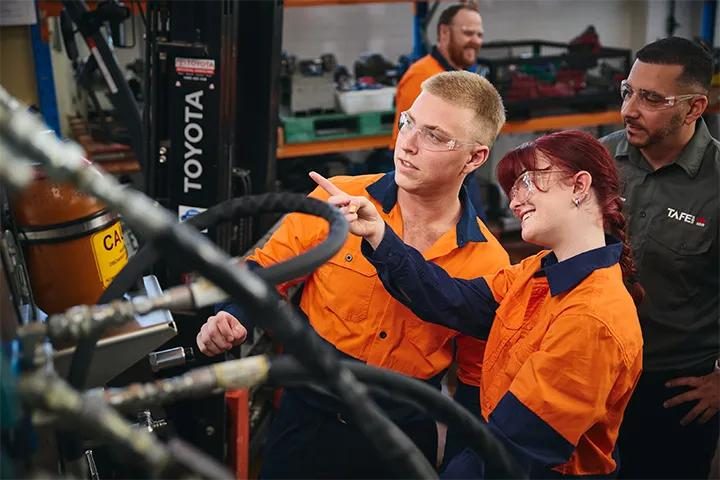
Illustrative imagery of vocational training. It does not depict a proposed facility, and geographic references are indicative and subject to validation.
What is decided, what remains open.
The distinction matters. The Alliance is asking for a process to be funded and led, not for any of the consequential decisions to be made in advance.
What has been proposed
- A co-design process led with TAFE NSW and employers.
- A funded next-stage business case covering employer demand, curriculum and equipment, and site assessment.
- Identification of responsible NSW Government leadership for the pathway.
- Agreed milestones for the next stage of work.
- Industry streams for testing with employers, structured for discussion, not for delivery.
What remains open
- The final site.
- The full course mix.
- Facility scope.
- Capital cost.
- Procurement and operating model.
- The delivery timetable.
The 2027 election ask
Ahead of the March 2027 NSW election, the Alliance is seeking a constructive, non-partisan commitment: fund the co-design and the next-stage business case, nominate responsible NSW Government leadership, and agree milestones. It is deliberately not a request for a site decision, a funding promise for construction, or a final course list.
The ask is framed to be workable for a government of any political persuasion, and to be measurable against agreed milestones rather than slogans.
Skills and local jobs must keep pace with growth and industry demand across The Hills, Blacktown and Hawkesbury, and today no single body owns that alignment.
Establish a development pathway for a North West Sydney TAFE Centre of Excellence, co-designed with TAFE NSW and employers.
Fund the co-design and next-stage business case, nominate responsible NSW Government leadership, and agree milestones for delivery of that stage.
Final site, full course mix, facility scope, capital cost, procurement and operating model, all to be settled by the process being asked for.
Evidence and collaborators
- Employer demand: to be developed and verified directly with employers across the region.
- TAFE NSW and training-sector input: to be sought through engagement; no participation is confirmed.
- Council and civic participation: to be confirmed through engagement.
- Curriculum, equipment and site inputs: to be gathered for the next-stage business case.
Industry streams for testing, not final course commitments.
To structure the conversation with employers, the pathway starts from a set of broad industry streams. They exist to be challenged: which of them reflects real local demand, and which does not?
- Advanced manufacturing
- Construction & trades
- Health & aged care
- Digital & technology
- Transport & logistics
- Business services
What evidence we are gathering.
Three evidence streams will underwrite the next-stage business case. Each is currently a draft, built from what is known, and explicit about what is not yet verified.
Employer demand
Which occupations, skill levels and practical competencies local employers struggle to fill, gathered through direct employer engagement and verified before publication.
Curriculum & equipment
What training would need to cover, and what equipment and workshop space it would need to run on, to be developed with training providers and industry, not assumed.
Site assessment
Land, access and servicing considerations that any future assessment would test. No site has been identified, shortlisted or preferred. This work defines the criteria, not the location.
The evidence behind a skills proposition.
Practical training, workshop floors and industry equipment, the kind of capability a Centre of Excellence would be tested against.
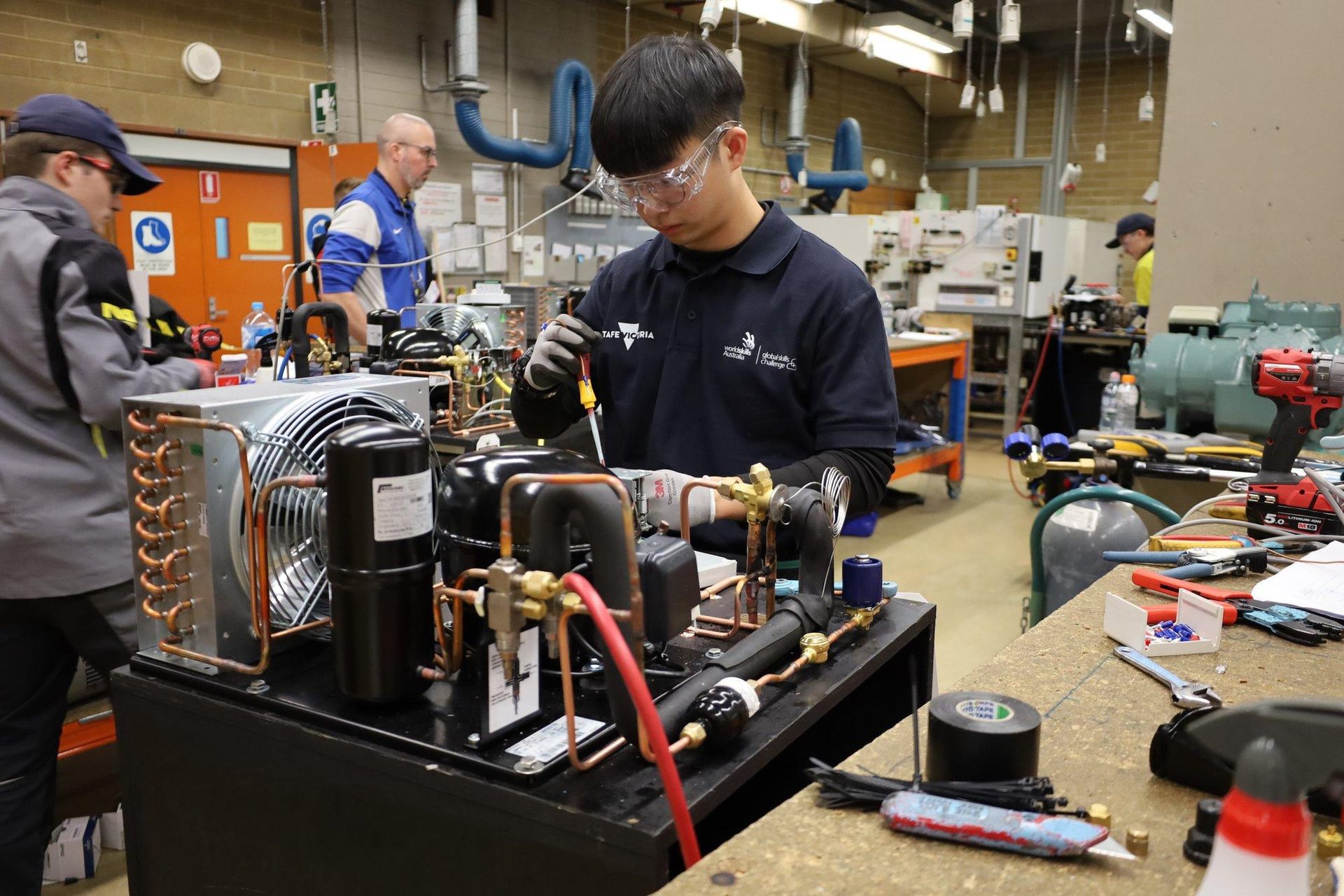
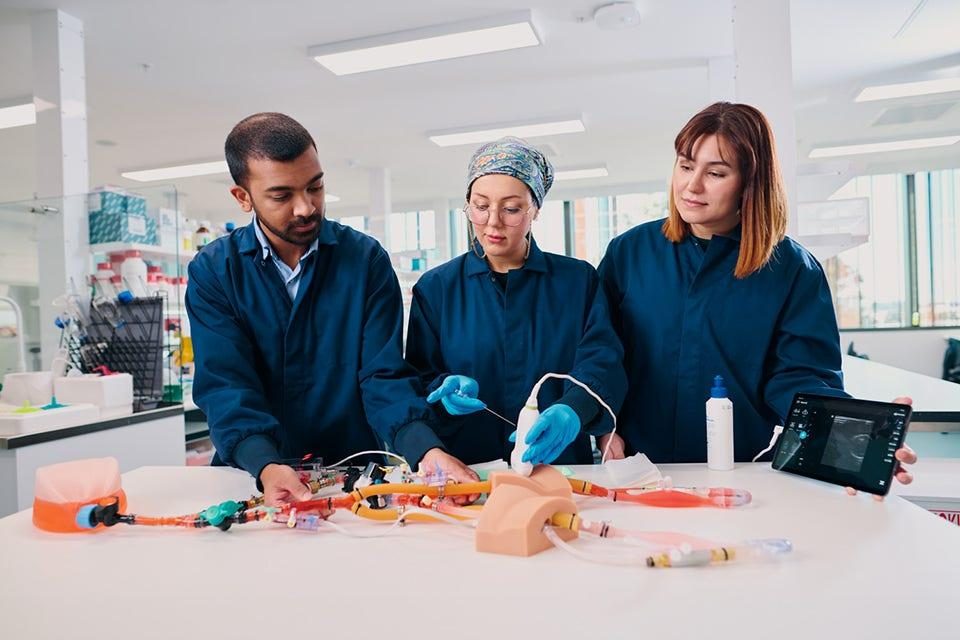

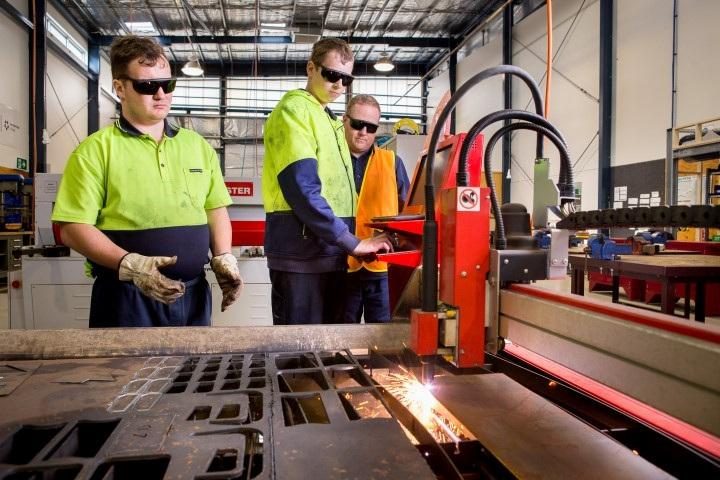
Employers set the standard. Help us test it.
Tell us what your workforce actually needs, the roles you cannot fill, the skills you cannot find, the training that would make a difference. Every contribution is treated as evidence to be verified, not as an endorsement.